How does a talent as mediocre as Sammy Hagar become a phenomenon as big as Sammy Hagar?
It's all in a book I can't believe I just read, not to mentioned enjoyed a little bit -- albeit with the same guilty pleasure I get from some of his songs.
What I learned was the Red Rocker is possessed not only of extraordinary self-determination and confidence but a related inability to be discouraged or embarrassed when things go wrong. He's a happy-go-lucky and at times ridiculous star whose self-styled success is never really about hitting the right note, writing the perfect song or cutting a great album, but rather being at the right place at the right time, knowing the right guy, and making the right bets.
That he's become a resort restaurant magnate, millionaire and walking lifestyle brand for aging rockers all over provides an ironic contrast to his one-time bandmates in Van Halen who had a million things going for them musically but are basically incapable of sustaining successful lives. Not that Sammy's bio is deep enough to point that out.
Sammy Hagar was born to a poor family in blue-collar Fontana, Calif., in 1947. His father Bobby was an abusive alcoholic and one-time prizefighter whom Sammy says once set the all-time record for being knocked down in a single fight -- 20. This and his mother's lesson in fighting off poverty forges young Sammy's determination. "Rock-and-roll and pussy," as he puts it, provides career aspiration.
At different times in the book Sammy confesses to wanting to be like Eric Clapton, David Bowie, Mick Ronson, Keith Richards, Mick Jagger, Rod Stewart and Jeff Beck but one way or another always found himself alongside serious guitarists, starting with Ronnie Montrose, whose eponymous band and influential first record Sammy provided vocals for (then a young veteran of regional bar bands, Sammy opines he got the Montrose gig because the leader was an egomaniac frightened that a star would upstage him).
Financial problems and acrimony between Sammy and Ronnie ends Hagar's Montrose run after two LPs, but the nation-rocking debut would only gain stature in the years to come (inspiring the Van Halen brothers, to name two). I predict the first relief pitcher who uses "Space Station No. 5" as warmup music will record 59 saves.
Though Hagar is fired by Montrose, some leftover songs find their way to influential manager John Carter and soon enough Hagar is on an album-a-year solo career and supporting his young family as a touring rocker, building regional followings in places like St. Louis, Dallas and the Northwest (he never really penetrated New York that I could determine beyond newsstand appearances in Circus and Creem). These albums from NINE ON A TEN SCALE (1976) through VOA (1984) mix melodic rock, some metal edges, cover songs and plenty of filler. None are huge hits, but each give fans at least a little of what they like. He's fortunate to be in the thick of it when MTV debuts and his distinct if inelegant visual style (red clothes, red guitars, frizzy blonde afro) was video-friendly from the get-go.
Why red? Well, as Sammy's not afraid to tell you he's got a special thing for red. Along with the number 9. He believes a psychic foretold his entire career. He thinks UFOs are out there and that aliens walk among us. This strain of prideful ignorance -- in combination with what my friend Edward describes as the rich-guy libertarianism behind the dumb protest anthem "I Can't Drive 55" -- gives off a Trumpian whiff that turns me off but helps to explain that "Red" state appeal.
Succeeding the legendary David Lee Roth at the front of Van Halen wasn't a job for the feint of heart but Hagar takes it in stride, knocking out the band's best-selling if not most loved album right off the bat in 5150. At the same time he's under no illusions that he can save the band from the brothers' unstoppable drinking habits (Testimony to Hagar's own use is more than a little inconsistent, though he comes off primarily as a recreational user). Some of the most compelling passages in the book describe Alex Van Halen's drinking excesses and Eddie Van Halen's sorry state of physical and mental health that spoiled a 2003 reunion tour.
Roth by the way comes off as a jerk too, refusing to share the spotlight in an ill-fated co-headlining tour while both singers were on the outs with the brothers. Hagar in the meantime grows closest to sacked bassist Michael Anthony, who provides an eff-you to the Van Halens in the guise of a foreword.
Beyond proudly blowing hundreds of thousands on sports cars, Hagar's entrepreneurial nose has him investing in Fontana house-flipping, the mountain-bike business, a travel agency, airport restaurants, bookwriting (this bestseller from 2011 and an even newer cookbook) and a resort property in Mexico. The latter took some time to succeed, with Hagar buying out early co-investors Edward and Alex Van Halen, only to find them interpreting the whole thing as an elaborate scam once it blew up. "Cabo Wabo" made Hagar a millionaire many times over (his share in a tequila associated with the resort sold for $80 million) and turned Hagar into the Jimmy Buffet of headbangers.
Showing posts with label Montrose. Show all posts
Saturday, February 11, 2017
Thursday, December 3, 2015
You Really Got Me Now
If the Beatles' crucible were the rough-and-tumble clubs of Hamburg, Germany, Van Halen's were poolside backyards in sunny Pasadena. Greg Renoff's new book VAN HALEN RISING puts the reader in the crowds of teens paying $1 admission for illicit outdoor keg parties where an ascending Van Halen provided the entertainment, and forged its spirit.
An immersive, well-researched tale of pre-fame trajectory, VAN HALEN RISING also makes a convincing case for how revolutionary they were upon arrival — a conceit that's easy to overlook beyond the considerable chops of Eddie.
The Van Halen family arrived in California as Dutch immigrants in 1962 with little more than a piano to their name. Father Jan worked as a jazz clarinetist in Europe and followed relatives and a vague promise of opportunity to California, settling in working-class digs in suburban Pasadena.
His two sons, who didn't even speak English when they arrived, dutifully took piano and violin lessons until their restlessness for experimentation became too great and they morphed into aspiring rockers. Drummer Alex and guitarist Edward fronted a variety of cover bands playing under names like the Broken Combs, Trojan Rubber Company, Genesis, and Mammoth. The latter two names would be retired upon learning that other bands went by the same handles: The eponymous surname they eventually settled upon, Renoff reveals, came not from them but from an influential new frontman.
The Van Halens and David Lee Roth first came across one another as musical rivals, and they could not have been any more different. The son of a wealthy ophthamologist, Roth pursued stardom as obsessively as Eddie pursued guitar. Drawn to what he recognized were the area's best musicians, Roth auditioned to sing for them only to be rejected — twice. Undeterred, Roth eventually wormed his way into Mammoth against the better judgement of its existing members, in part by relieving Eddie of unwanted lead vocal duties, but mainly by possessing a PA system they needed to gig. Using the PA as leverage, Roth would at times loan the equipment in exchange for a chance to sing and others just as an excuse to hang around. When they could no longer stand to be in Roth's debt, they surrendered and made him the singer. Renoff calls this "the greatest rock and roll power play of all time."
Then a cover band noted for their ability to deliver note-for-note renditions of heavy rock classics, Mammoth were an odd fit for Roth, whose influences included cheeseball crooners like Louis Prima and whose tastes leaned toward Motown, glam and funk. Beyond that, he wasn't anyone's idea of a good singer. But his influence was a crucial ingredient in the Van Halen formula, Renoff notes. He got the band to lighten up on plodding, blues-rock jams and aim instead toward tight, melodic rock you could dance to. He convinced them to cover songs like Billy Preston's "Will it Go Round in Circles." He also injected the band with a sense of style, encouraging his bandmates to adopt flashy stage clothes instead of the jeans and flannel shirts they typically wore.
This new approach also required the band improve their singing, leading to the addition of bassist Michael Anthony. Anthony, whose soaring background vocals would become another distinct element of the Van Halen sound, proved to be "the final piece of the puzzle," Renoff writes.
As Van Halen graduated from backyard jams to club dates it had several brushes with success — most notably a doomed come-on from KISS' Gene Simmons who not surprisingly had per$onal goals in mind. But in a time when metal was dying, disco was soaring, punk was coming, and California was still exporting soft-rockers, the notion of breaking a heavy rock act was considered a longshot by the industry, and several labels passed.
In the end, talent won out. Ted Templeman, a house producer for Warner Brothers whose clients included both heavy-guitar acts (Montrose) and three-part harmony singers (the Doobie Brothers) caught them at an LA showcase. "I saw Ed and I was fucking knocked out," Templeman tells Renoff. "He was the best musician I'd ever seen in person."
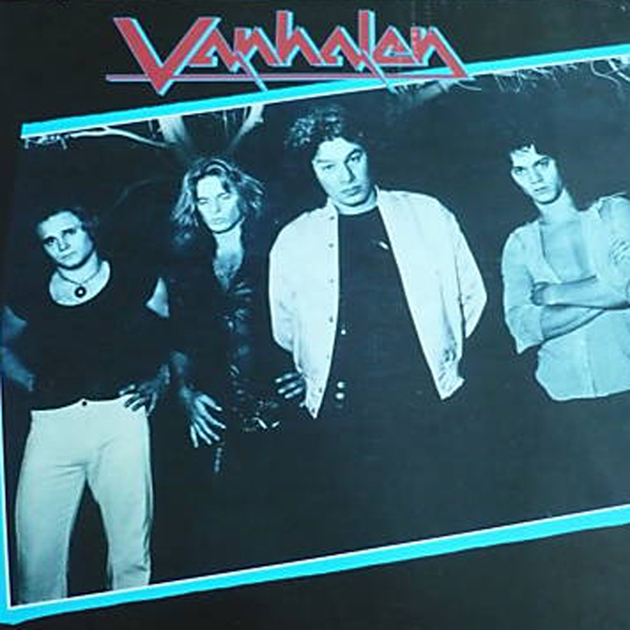
Still, Van Halen was a hard sell: Templeman was careful to present them first to Warners' open-minded president Mo Ostin as opposed to its chief A&R man, Lenny Waronker, at the time a leading advocate of the soft-rock "L.A. sound." And as the label prepared for the release of their first album, members were horrified when an early version of the cover packaged them as though they were a punk band.
Renoff's case for Van Halen as rock revolutionaries was made not only by its fresh sound profile -- hard-hitting riffs with melody and vocal harmonies, accompanying Eddie's stunning virtuosity -- but also by the tours in support of their debut album. Aging metal masters Black Sabbath purposefully selected Van Halen to open a 1978 tour for them with the idea that casting an unknown would keep the fans' focus on them, but the scheme backfired spectacularly as Van Halen shocked one audience after another, while brashly going toe-to-toe with any musicians who'd outparty them. The tour so demoralized Black Sabbath that singer Ozzy Osbourne would soon set off on his own, and as the record took off -- peaking at No. 19 on the Billboard charts, but destined to stay in the top 200 for 169 straight weeks -- hard rock was the never the same.
Renoff ascribes the subsequent success of platters like AC/DC's BACK IN BLACK, the Scorpions' LOVE AT FIRST BITE and Judas Priests' SCREAMING FOR VENGEANCE to the cultural breakthrough of Van Halen. While Van Halen were never a "metal" band per se -- Roth preferred the term "Big Rock" -- they influenced the genre with bands like Priest, KISS and others shamelessly borrowing their best tricks, while a generation of young guitarists had a new hero.
An immersive, well-researched tale of pre-fame trajectory, VAN HALEN RISING also makes a convincing case for how revolutionary they were upon arrival — a conceit that's easy to overlook beyond the considerable chops of Eddie.
The Van Halen family arrived in California as Dutch immigrants in 1962 with little more than a piano to their name. Father Jan worked as a jazz clarinetist in Europe and followed relatives and a vague promise of opportunity to California, settling in working-class digs in suburban Pasadena.
His two sons, who didn't even speak English when they arrived, dutifully took piano and violin lessons until their restlessness for experimentation became too great and they morphed into aspiring rockers. Drummer Alex and guitarist Edward fronted a variety of cover bands playing under names like the Broken Combs, Trojan Rubber Company, Genesis, and Mammoth. The latter two names would be retired upon learning that other bands went by the same handles: The eponymous surname they eventually settled upon, Renoff reveals, came not from them but from an influential new frontman.
The Van Halens and David Lee Roth first came across one another as musical rivals, and they could not have been any more different. The son of a wealthy ophthamologist, Roth pursued stardom as obsessively as Eddie pursued guitar. Drawn to what he recognized were the area's best musicians, Roth auditioned to sing for them only to be rejected — twice. Undeterred, Roth eventually wormed his way into Mammoth against the better judgement of its existing members, in part by relieving Eddie of unwanted lead vocal duties, but mainly by possessing a PA system they needed to gig. Using the PA as leverage, Roth would at times loan the equipment in exchange for a chance to sing and others just as an excuse to hang around. When they could no longer stand to be in Roth's debt, they surrendered and made him the singer. Renoff calls this "the greatest rock and roll power play of all time."
Then a cover band noted for their ability to deliver note-for-note renditions of heavy rock classics, Mammoth were an odd fit for Roth, whose influences included cheeseball crooners like Louis Prima and whose tastes leaned toward Motown, glam and funk. Beyond that, he wasn't anyone's idea of a good singer. But his influence was a crucial ingredient in the Van Halen formula, Renoff notes. He got the band to lighten up on plodding, blues-rock jams and aim instead toward tight, melodic rock you could dance to. He convinced them to cover songs like Billy Preston's "Will it Go Round in Circles." He also injected the band with a sense of style, encouraging his bandmates to adopt flashy stage clothes instead of the jeans and flannel shirts they typically wore.
This new approach also required the band improve their singing, leading to the addition of bassist Michael Anthony. Anthony, whose soaring background vocals would become another distinct element of the Van Halen sound, proved to be "the final piece of the puzzle," Renoff writes.
As Van Halen graduated from backyard jams to club dates it had several brushes with success — most notably a doomed come-on from KISS' Gene Simmons who not surprisingly had per$onal goals in mind. But in a time when metal was dying, disco was soaring, punk was coming, and California was still exporting soft-rockers, the notion of breaking a heavy rock act was considered a longshot by the industry, and several labels passed.
In the end, talent won out. Ted Templeman, a house producer for Warner Brothers whose clients included both heavy-guitar acts (Montrose) and three-part harmony singers (the Doobie Brothers) caught them at an LA showcase. "I saw Ed and I was fucking knocked out," Templeman tells Renoff. "He was the best musician I'd ever seen in person."
Still, Van Halen was a hard sell: Templeman was careful to present them first to Warners' open-minded president Mo Ostin as opposed to its chief A&R man, Lenny Waronker, at the time a leading advocate of the soft-rock "L.A. sound." And as the label prepared for the release of their first album, members were horrified when an early version of the cover packaged them as though they were a punk band.
Renoff's case for Van Halen as rock revolutionaries was made not only by its fresh sound profile -- hard-hitting riffs with melody and vocal harmonies, accompanying Eddie's stunning virtuosity -- but also by the tours in support of their debut album. Aging metal masters Black Sabbath purposefully selected Van Halen to open a 1978 tour for them with the idea that casting an unknown would keep the fans' focus on them, but the scheme backfired spectacularly as Van Halen shocked one audience after another, while brashly going toe-to-toe with any musicians who'd outparty them. The tour so demoralized Black Sabbath that singer Ozzy Osbourne would soon set off on his own, and as the record took off -- peaking at No. 19 on the Billboard charts, but destined to stay in the top 200 for 169 straight weeks -- hard rock was the never the same.
Renoff ascribes the subsequent success of platters like AC/DC's BACK IN BLACK, the Scorpions' LOVE AT FIRST BITE and Judas Priests' SCREAMING FOR VENGEANCE to the cultural breakthrough of Van Halen. While Van Halen were never a "metal" band per se -- Roth preferred the term "Big Rock" -- they influenced the genre with bands like Priest, KISS and others shamelessly borrowing their best tricks, while a generation of young guitarists had a new hero.
Labels:
Black Sabbath,
book review,
Kiss,
Montrose,
Van Halen
Subscribe to:
Posts (Atom)